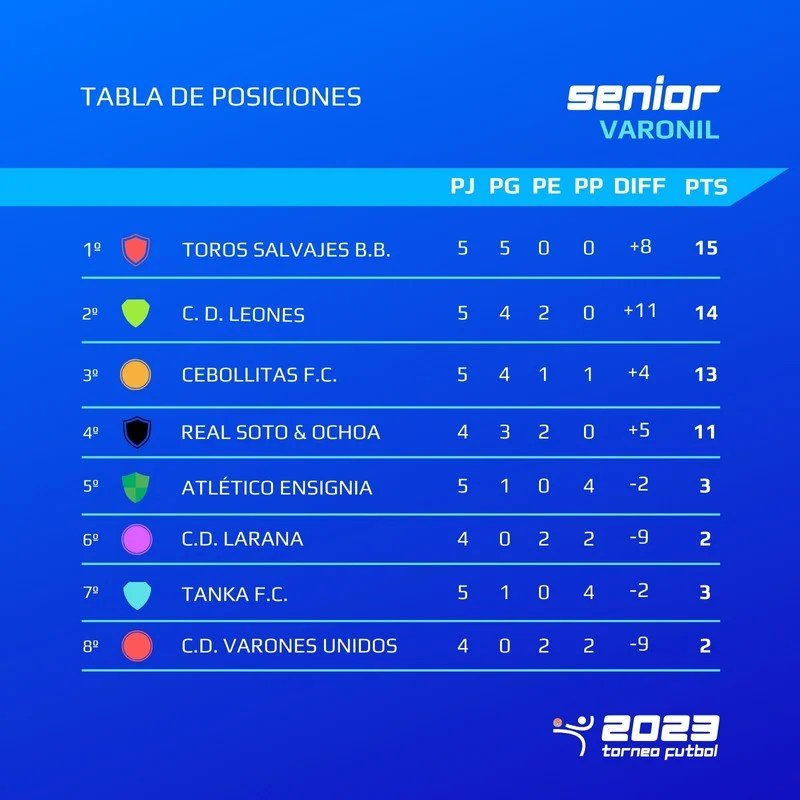
Every sports league, from the professional pitch to your local community tournament, hinges on one critical element: the Tabla de Posiciones y Formato de Clasificación – the standings table and its classification format. This isn't just a list of teams; it's the beating heart of competition, a dynamic reflection of effort, strategy, and results. Yet, for many organizers, managing these tables can feel like a complex puzzle, fraught with manual errors, late updates, and confusing tie-breakers.
This guide is designed to cut through that complexity. We'll explore the fundamentals of how standings are built, demystify the various classification formats, and show you how modern tools can transform this often-arduous task into a seamless, engaging experience for everyone involved.
At a Glance: What You'll Learn
- The Anatomy of a Standings Table: Understand the core metrics that define league performance.
- Decoding Classification Rules: Grasp the different methods for ranking teams, especially when ties occur.
- Common Challenges in League Management: Identify typical pitfalls in tracking standings manually.
- Leveraging Automation for Fairness: Discover how digital platforms simplify and enhance the process.
- Engaging Your Audience: Learn about features that boost interaction and transparency.
- Best Practices for Organizers: Implement strategies for smooth, credible league operations.
The Unsung Hero: Why Standings Tables (Tabla de Posiciones) Truly Matter
At its core, a standings table is more than just a scoreboard; it's the narrative of a season unfolding. It tells who's performing well, who's struggling, and what's at stake in upcoming matches. For players, it's a constant source of motivation and a clear indicator of their team's journey. For fans, it's the go-to source for understanding the competitive landscape. And for organizers, it's the foundation of a fair and transparent competition.
Imagine a football league without a clear Tabla de Posiciones y Formato de Clasificación. Chaos, disputes, and a complete lack of competitive spirit would ensue. It's the ultimate arbiter, ensuring that every match, every goal, and every point contributes meaningfully to the overall outcome.
Core Metrics: The Building Blocks of Any Standings Table
While specific sports might have unique metrics, most standings tables share a common set of indicators:
- GP (Games Played): The total number of matches a team has competed in.
- W (Wins): The number of matches won.
- D (Draws): The number of matches ending in a tie.
- L (Losses): The number of matches lost.
- GF (Goals For / Points For): The total number of goals (or points) scored by the team.
- GA (Goals Against / Points Against): The total number of goals (or points) conceded by the team.
- GD (Goal Difference / Point Difference): The difference between goals scored and goals conceded (GF - GA). This is often a crucial tie-breaker.
- Pts (Points): The total accumulated points, calculated based on the league's point system (e.g., 3 points for a win, 1 for a draw, 0 for a loss in football).
These metrics, combined, paint a comprehensive picture of each team's performance throughout the season.
Decoding Classification Formats: Beyond Simple Point Totals
While points are the primary determinant of ranking, they rarely tell the whole story. What happens when two or more teams finish with the exact same number of points? This is where the Formato de Clasificación – the classification format – comes into play, outlining the specific tie-breaking rules that ensure a definitive order.
Understanding these tie-breakers is paramount for any league organizer aiming for fairness and clarity. These rules should always be established and communicated before the tournament begins to avoid disputes.
Common Tie-Breaking Rules
Leagues employ a variety of rules to differentiate teams on equal points. Here are some of the most common:
- Goal Difference (GD): Often the first tie-breaker, the team with a higher goal difference (goals scored minus goals conceded) ranks higher. This rewards teams that not only win but do so convincingly.
- Goals For (GF): If goal difference is also equal, the team that has scored more goals overall might be ranked higher. This favors offensive play.
- Head-to-Head Record: This is a very popular and often preferred tie-breaker, especially in smaller leagues or group stages. It looks at the results only between the tied teams.
- Points in Head-to-Head Matches: The team with more points accumulated in matches directly between the tied teams ranks higher.
- Goal Difference in Head-to-Head Matches: If points are still tied, goal difference from only those direct matches is considered.
- Goals Scored in Head-to-Head Matches: If still tied, goals scored in direct matches.
- Away Goals in Head-to-Head Matches: In some two-legged or specific formats, away goals in direct matches can be a tie-breaker.
- Fair Play Record: Teams with fewer yellow or red cards might be ranked higher. This promotes sportsmanship.
- Drawing of Lots / Playoff Match: As a last resort, if all other tie-breakers yield no clear winner, a random draw or a specific playoff match might be organized. This is less common but sometimes necessary.
The specific order and weighting of these rules vary widely by sport and league. For example, in many international football tournaments, head-to-head is prioritized for group stages, while goal difference often takes precedence in domestic leagues.
The Hidden Headaches: Why Manual Standings Management Fails
You've probably seen it before: a league organizer frantically updating an Excel spreadsheet after every game, trying to sort teams, apply tie-breakers, and double-check calculations. While Excel is a powerful tool, it becomes a liability for managing complex league standings for several reasons:
- Prone to Manual Errors: A single typo can throw off an entire table, leading to confusion and distrust.
- Time-Consuming Updates: Each game requires manual data entry and recalculation, which is slow and drains organizer time.
- Complex Tie-Breakers: Implementing intricate tie-breaking rules, especially head-to-head scenarios involving multiple teams, is incredibly difficult to automate reliably in a spreadsheet without advanced coding.
- Lack of Real-Time Information: Spectators and teams often have to wait for updates, diminishing engagement and transparency.
- No Visual Reporting: Excel sheets are functional but lack the dynamic, easy-to-digest visual appeal of a dedicated platform.
- Difficult to Share: Distributing updated spreadsheets can be cumbersome and quickly leads to version control issues.
These challenges highlight a critical need for a more robust solution, especially for those who want to focus on the game, not the administration. If you're looking to streamline processes for your events, consider how tools can simplify tasks like creating fair tournament rules right from the start.
Deporstar: Your Game-Changing Ally in Tournament Management
Imagine a world where your league's Tabla de Posiciones y Formato de Clasificación updates itself, accurately, and in real-time, without you lifting a finger after entering results. That's the promise of platforms like Deporstar.
Deporstar is a specialized, automated web tool designed to create, manage, and organize football tournaments, completely eliminating the need for complicated Excel files or manual templates. It's built for organizers who want to minimize administrative burden and maximize the enjoyment of the game.
How Deporstar Transforms Your League Management
- Effortless Setup: Getting started is incredibly simple. All you need is a Google account. Once logged in, you can create a new tournament in less than a minute. You then register your league's teams and, with a few clicks, generate the entire fixture.
- Automated Standings Updates: This is where Deporstar truly shines. After each match, you simply register the results. The platform then automatically updates the standings table in the "Tabla" tab. It organizes the classification correctly, even intelligently handling scenarios with pending matches, so everyone always sees an accurate picture of the league.
- No More Manual Calculations: Say goodbye to wrestling with formulas or frantically checking tie-breakers. Deporstar handles all point calculations, goal differences, and complex tie-breaking rules behind the scenes, ensuring accuracy every time.
- Real-Time Transparency: Teams, players, and fans can access the updated standings instantly, fostering engagement and keeping everyone informed. This immediacy is crucial for maintaining interest, much like staying updated on All Sudamericano U-20 matches as they happen.
- Advanced Tools for Unique Scenarios: Deporstar goes beyond basic standings with powerful features:
- Point Bonification or Discount: Need to add or subtract points due to sanctions, appeals, or specific internal tournament rules? Deporstar allows you to apply these adjustments easily, maintaining the integrity of the standings.
- Notes and Highlights: Mark key teams, highlight crucial positions (like qualification spots or relegation zones), or add important notes directly on the table for quick visual reference.
- Results Simulator: This interactive tool is a fan favorite! Users can test out possible match scores for upcoming games and instantly see how the standings table would change. This generates immense interaction and speculation, adding another layer of excitement to the league.
By automating the mundane and providing insightful tools, Deporstar allows organizers to focus on the competitive spirit and community building, rather than getting bogged down in administrative tasks. This efficiency extends to other critical areas, such as streamlining team registrations at the outset of your tournament.
Crafting Your Own Fair Play: Best Practices for League Organizers
Even with powerful tools like Deporstar, the human element remains vital. Here are some best practices to ensure your league runs smoothly, fairly, and enjoys maximum engagement:
- Crystal-Clear Rules from Day One: Before a single ball is kicked, publish and distribute your complete rulebook. This must include the precise Formato de Clasificación – outlining the point system, all tie-breaking rules in their exact order, and any special conditions (e.g., how walkovers are handled). Ambiguity breeds conflict.
- Prioritize Transparency: Make it easy for everyone to access the standings, fixture, and rules. A web platform is ideal for this. The more accessible the information, the fewer questions and disputes you'll encounter.
- Consistency is Key: Apply rules consistently throughout the season. Any deviation, even well-intentioned, can undermine trust.
- Communicate Regularly: Keep teams updated on important announcements, schedule changes, and any notable shifts in the standings.
- Leverage Technology (Like Deporstar!): Embrace automated solutions. They save time, reduce errors, and provide a professional experience for all participants. The time saved manually tracking a complex table can be better spent on things like generating optimal league fixtures to maximize participant enjoyment and minimize travel.
- Encourage Sportsmanship: While the standings are about competition, foster an environment of fair play and respect. Tie-breaking rules like Fair Play records can help reinforce this.
- Engage Your Participants: Use features like Deporstar's results simulator to keep players and fans actively thinking about the league's outcomes. This transforms passive viewing into active interaction.
Beyond the Numbers: Advanced Scenarios and Strategic Considerations
While basic league play is straightforward, some scenarios can add layers of complexity to your standings. Anticipating and planning for these is a hallmark of a seasoned organizer.
Multi-Stage Tournaments
Many leagues aren't just a single round-robin. They might feature:
- Group Stages followed by Knockouts: Here, the Tabla de Posiciones within each group determines who advances to the next stage (quarter-finals, semi-finals). Different tie-breaking rules might apply for group stage qualification versus a direct league format.
- Promotion and Relegation: In multi-tier leagues, the top teams from a lower division get promoted, while the bottom teams from a higher division are relegated. The final standings dictate these crucial movements.
- Playoffs and Final Series: Even after a regular season, top teams might compete in a separate playoff bracket. The regular season standings usually determine seeding for these playoffs, giving higher-ranked teams an advantage (e.g., home-field advantage or easier opponents).
Special Circumstances
- Mid-Season Rule Changes: Avoid these at all costs. Any alteration to the Formato de Clasificación mid-tournament can be seen as unfair and compromise the integrity of the league. If absolutely necessary, ensure unanimous consent and clear communication.
- Walkovers/Forfeits: How do you award points and goals for a forfeited match? The rules should specify whether it's a 3-0 default win, or if actual goals scored by the winning team prior to the forfeit are counted if the game was in progress. Consistency here is vital for maintaining proper advanced tie-breaking scenarios.
- Disciplinary Actions: Point deductions for serious infractions must be clearly outlined in the rules and applied transparently. Deporstar's point bonification/discount feature is perfect for managing such situations without manual headaches.
By having clear guidelines for these scenarios, you'll maintain the integrity and fairness of your competition, regardless of what the season throws at you.
Your Next Steps: Building a League That Works
Managing a league, big or small, comes with its challenges, but the goal remains universal: to facilitate fair competition and celebrate the spirit of the game. The Tabla de Posiciones y Formato de Clasificación is central to this mission.
Instead of battling spreadsheets and manual calculations, empower yourself with tools designed for the modern league organizer. Take the hassle out of tracking standings, automate your updates, and engage your participants like never before.
The next time you're setting up a tournament, consider streamlining your administrative tasks from day one. You'll create a smoother, more enjoyable experience for everyone, allowing the focus to remain where it belongs: on the thrilling action on the field.